BUSINESS REGISTRATION
 FOOD & DRUG REGISTRATION
 DGFT REGISTRATION
 PESO REGISTRATION
 CDSCO DRUG
 TAX FILING
 CHA SERVICES
Income Tax Return Filing
Within 1- 2 business working days, our team of professionals from The Permiso will file your income tax return and provide you with an acknowledgement. The Permiso team will provide comprehensive assistance, starting from the project’s paperwork through its successful completion.
1000+
Satisfied Clients
3000+
Project Completed
10+
Years in Business

Book a Free
Consultation Call!
In India, filing an Income Tax Return (ITR) is the process by which both individuals and companies disclose their income and tax liabilities to the government. It is a yearly procedure that taxpayers must complete in order to report their income, investments, and tax-saving activities. The Income Tax Return is a formal document that provides the Income Tax Office with information about an individual’s income, deductions, exemptions, and overall financial situation.
Individuals and businesses must file tax returns by a certain deadline. If a taxpayer misses the deadline, he or she must pay a penalty.
Different Types of Income Tax Returns:
-
 ITR-1: Resident individuals having income upto Rs. 50 lakhs from Salaries, One house property, Other Sources (Interest, etc) and Agricultural income upto Rs. 5000
-
ITR-2: For individuals and HUF not having income from profits and gains of business or profession
-
ITR-3: For individuals and HUF having income from profits and gains of business or profession
-
ITR-4: For individuals, HUFs and Firms (Other than LLP) having total income upto Rs.50 lakh and having income from business and profession which is computed under sections 44AD, 44ADA or 44AE
-
ITR-5: For any persons other than Individual, HUF, Company and person filing Form ITR7
-
ITR-6: For companies not claiming exemption under section 11
-
ITR-7: For persons/companies under sections 139(4A) or 139(4) or 139(4C) or 139(4D)
When is it necessary in India to file income tax returns (ITR)?
If your total income exceeds the prescribed basic exemption limit, you must file an Income Tax Return (ITR) in India. The basic exemption limit varies according to the taxpayer’s age.
-
Individuals under the age of 60: Income up to INR 250,000 is tax-free.
-
Senior citizens (60 years and older but under 80 years): Income up to INR 3,000,000 is tax-free.
-
Super senior citizens (80 years and older): Income up to INR 500,000 is tax-free.
Documents required to file Income Tax Returns
-
PAN Card: A Permanent Account Number is required for filing income tax returns.
-
Aadhaar Card: It is mandatory to link Aadhaar with PAN, and Aadhaar is frequently required for e-filing.
-
Form 16/16A: These forms, issued by the employer or deductor, detail salary income and TDS (Tax Deducted at Source) deductions.
-
Bank statements: Bank statement for all of your accounts, including savings, fixed deposits, and recurring deposits.
-
Interest certificates: Interest certificates are required if you have interest income from savings accounts, fixed deposits, or other investments.
-
TDS Certificates: Certificates for tax deducted at source on non-salary income (such as interest income, rental income, and so on).
-
Form 26AS: This form, which can be downloaded from the income tax e-filing portal, contains information about the taxes deducted and deposited against your PAN.
-
Proof of Investments: Documents supporting Section 80C investments (such as LIC premium receipts and PPF passbooks).
-
House Property Information: If you own a house, information such as a lease agreement, municipal tax receipts, and a home loan interest certificate.
-
Documents Related to Capital Gains: If you have sold any property or investments, documents related to capital gains.
-
Details about your business or profession: If you are self-employed or own a business, documents pertaining to business income and expenses.
-
Other Income Documents: Any documents pertaining to additional sources of income, such as rental income, interest on securities, and so on.
-
Deduction Details: Documents supporting deductions claimed under various sections, such as 80D (health insurance), 80E (education loan interest), and so on.
-
Tax-saving Investment Proofs: Documents that support tax-saving investments made during the fiscal year.
-
Verification Documents: A signed copy of the ITR-V (Acknowledgment) if filing a physical copy. Verification for e-filing is done through Aadhaar OTP, net banking, or sending a signed ITR-V to the CPC Bengaluru.
Have you missed the filing deadline? In just a few minutes, you can file your late or revised returns through M/s. The Permiso within 3 working days. If you have any issues or facing any difficulty with the application, you can call +91 8104691667 or email us at info@thepermiso.com
Book a Free
Consultation Call!
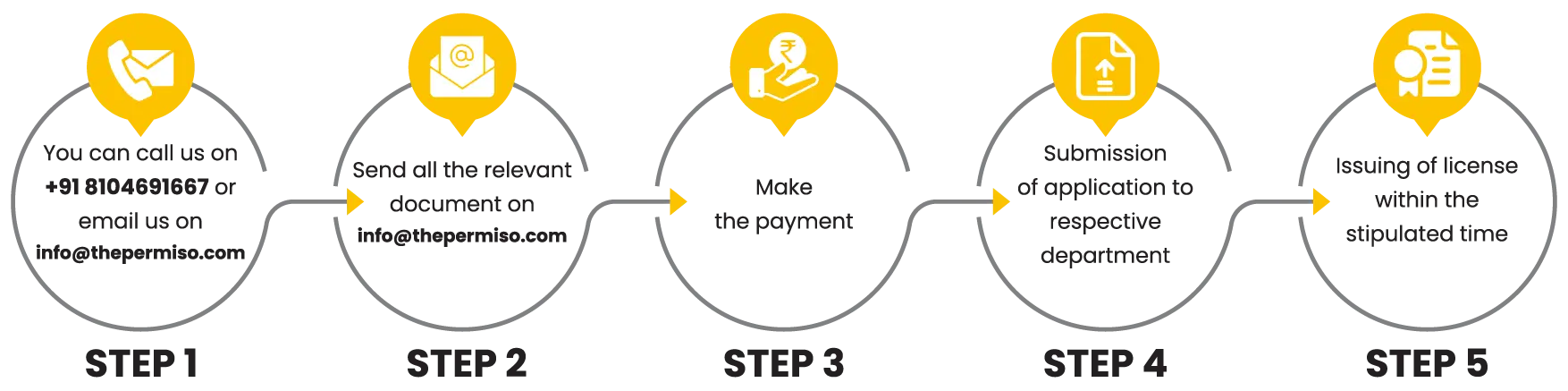
Income Tax Registration Procedure